School of Arts, Science and Technology Students Explore Counterweight at Whitestone Gallery Singapore
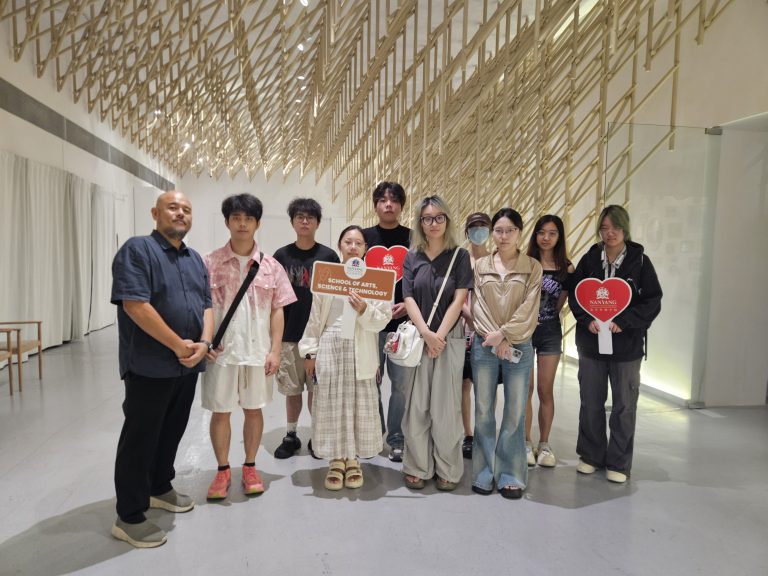
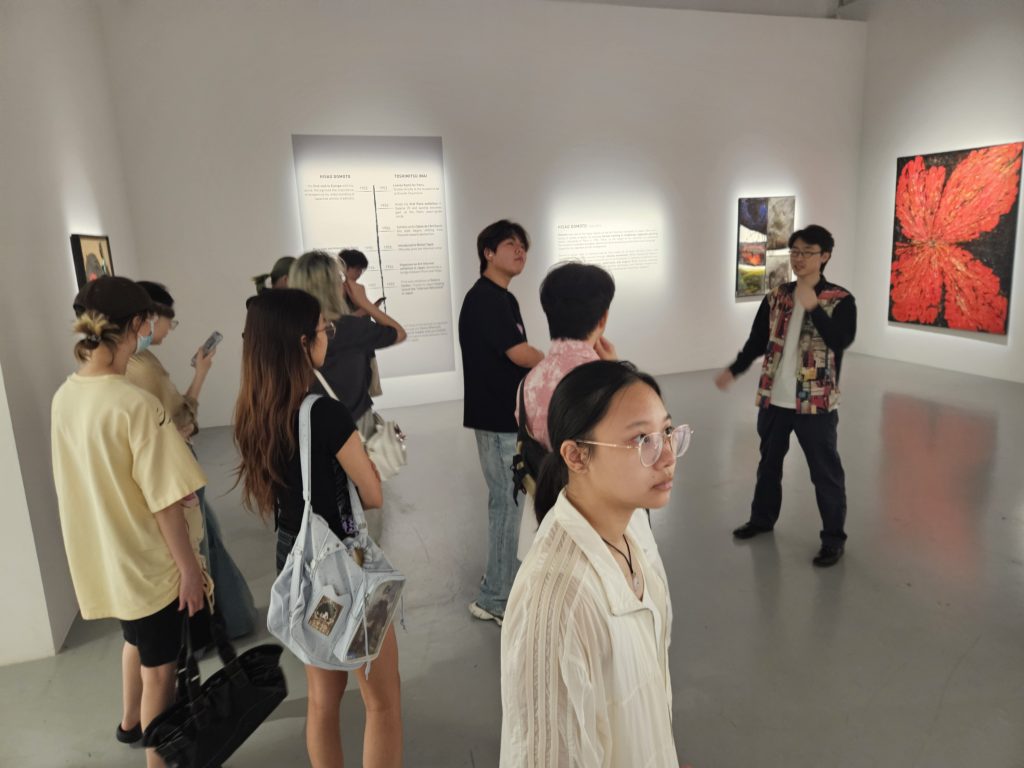
SAST students and their lecturer at Whitestone Gallery Singapore on 13 October 2026
Nanyang Institute of Management (NIM) brought nine students from the School of Arts, Science and Technology (SAST) on a learning journey to Whitestone Gallery Singapore on 13 October 2026. Students explored Counterweight: The Systems of Two, a contemporary art exhibition featuring artist duos Chow and Lin and Ruobing & Sai, curated by Tamares Goh.
The visit gave students a first-hand look at how contemporary artists communicate ideas through different materials, techniques and perspectives.
A Gallery With Nearly Six Decades of History
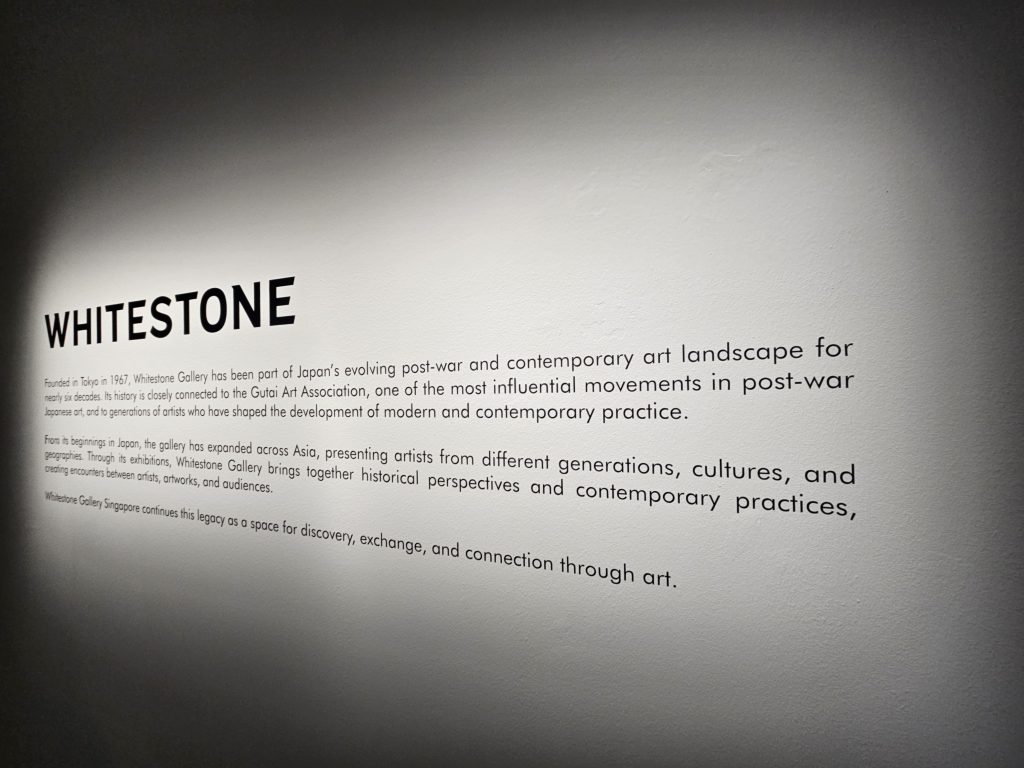
Founded in Tokyo in 1967, Whitestone Gallery has played a part in Japan’s post-war and contemporary art landscape for nearly six decades. Its history is closely connected to the Gutai Art Association, one of the most influential movements in post-war Japanese art.
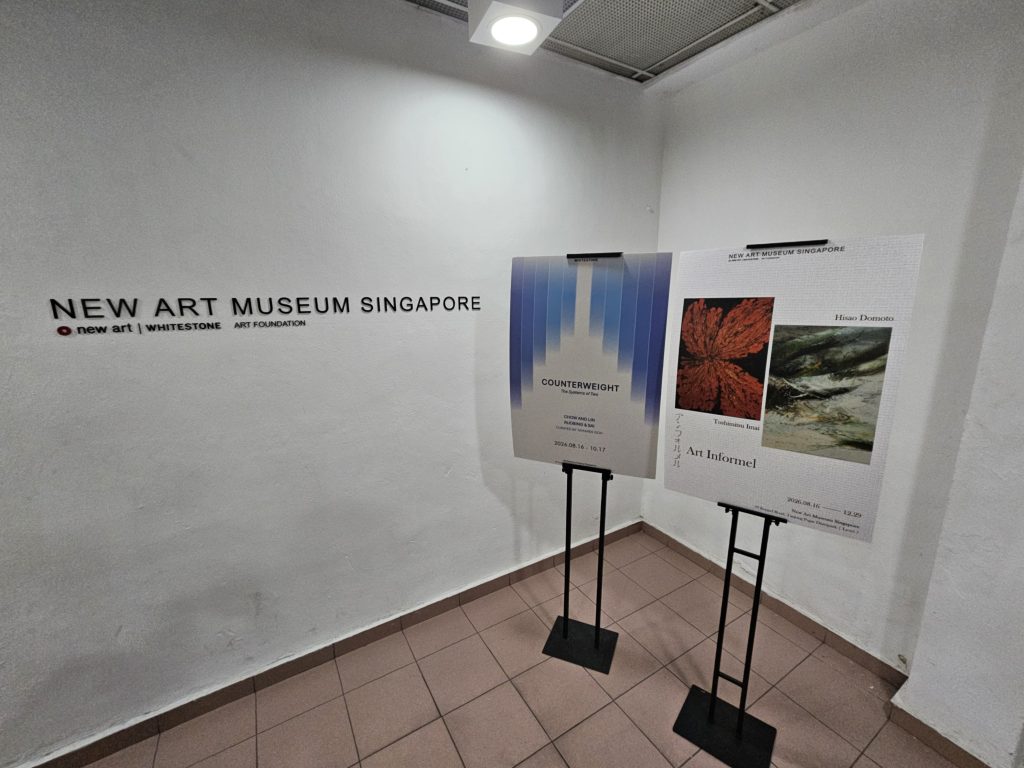
Today, the gallery presents artists from different generations and cultures across Asia. Its Singapore space, located at New Art Museum Singapore in Tanjong Pagar Distripark, continues this legacy as a place for discovery, exchange and connection through art.
The entrance to New Art Museum Singapore, home of Whitestone Gallery Singapore (left), and the gallery’s introduction wall (right)
Everyday Objects, New Meanings
Counterweight: The Systems of Two brings together the work of two artist duos. Throughout the exhibition, students saw how familiar, everyday objects can carry new meaning when placed in an artistic context.
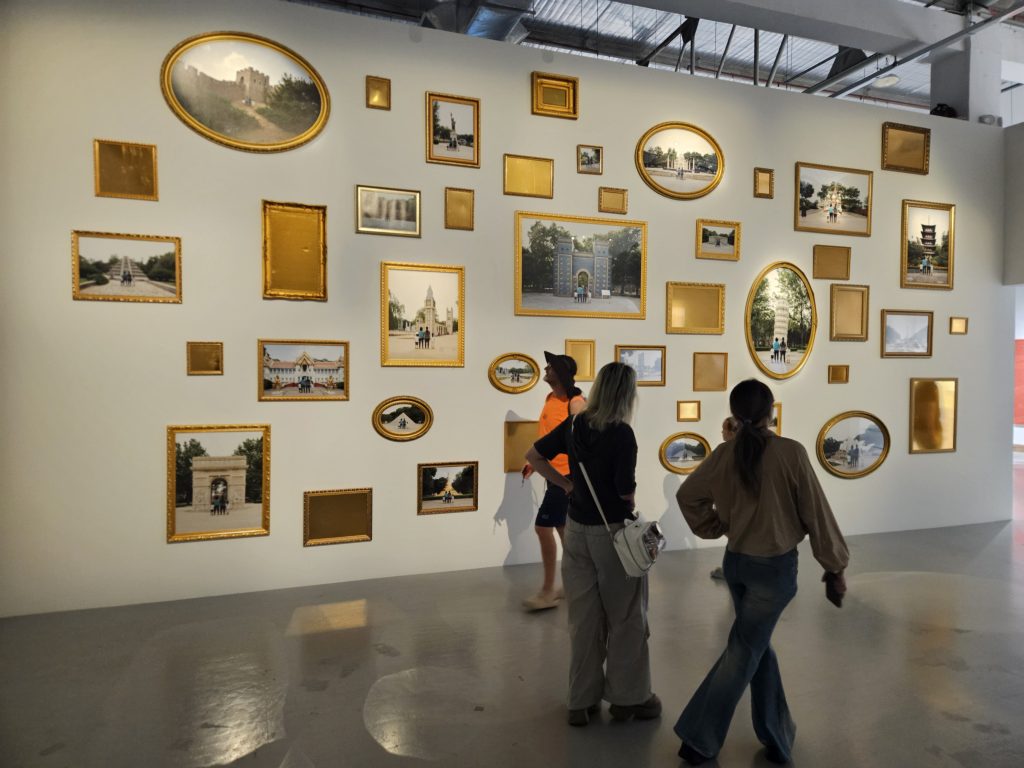
One of the highlight was Chow and Lin’s I want to bring you around the world (2020 to 2022). The work fills a wall with gold-framed photographs of a family posing in front of replica world landmarks, alongside a display case of small golden objects. Students discussed how the piece reflects on travel, memory and what it means to “see the world”.
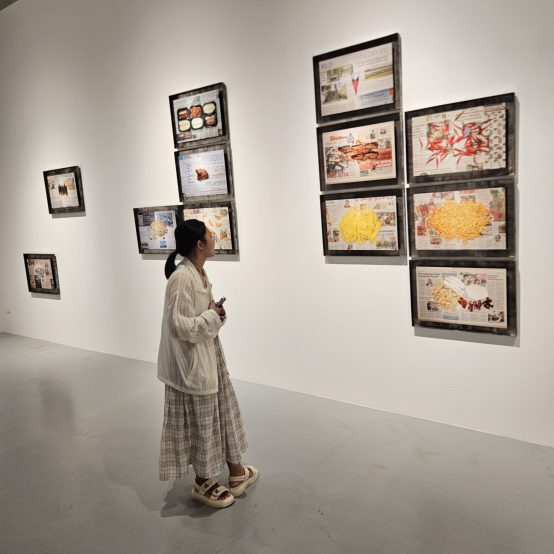
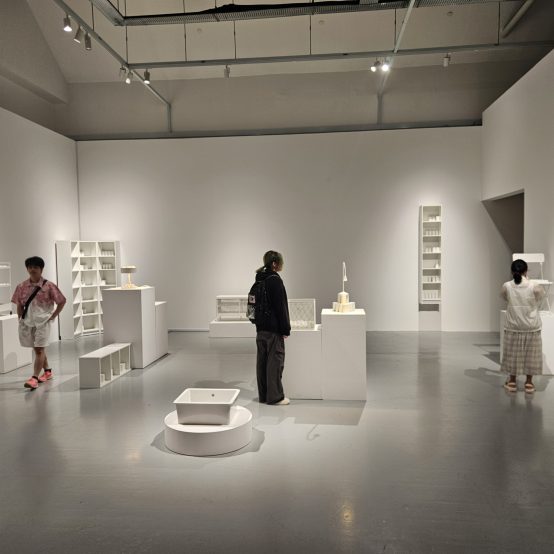
The students analysed a sequence of culinary compositions photographed on newspapers from around the world, and a gallery of all-white sculptural objects arranged on plinths and shelves. These works prompted conversations about consumption, routine and how artists use repetition and colour to guide the viewer’s attention.
A student studies a photographic series built on international newspapers (left) and students explore an installation of all-white sculptural objects (right)
Learning From a Guided Tour
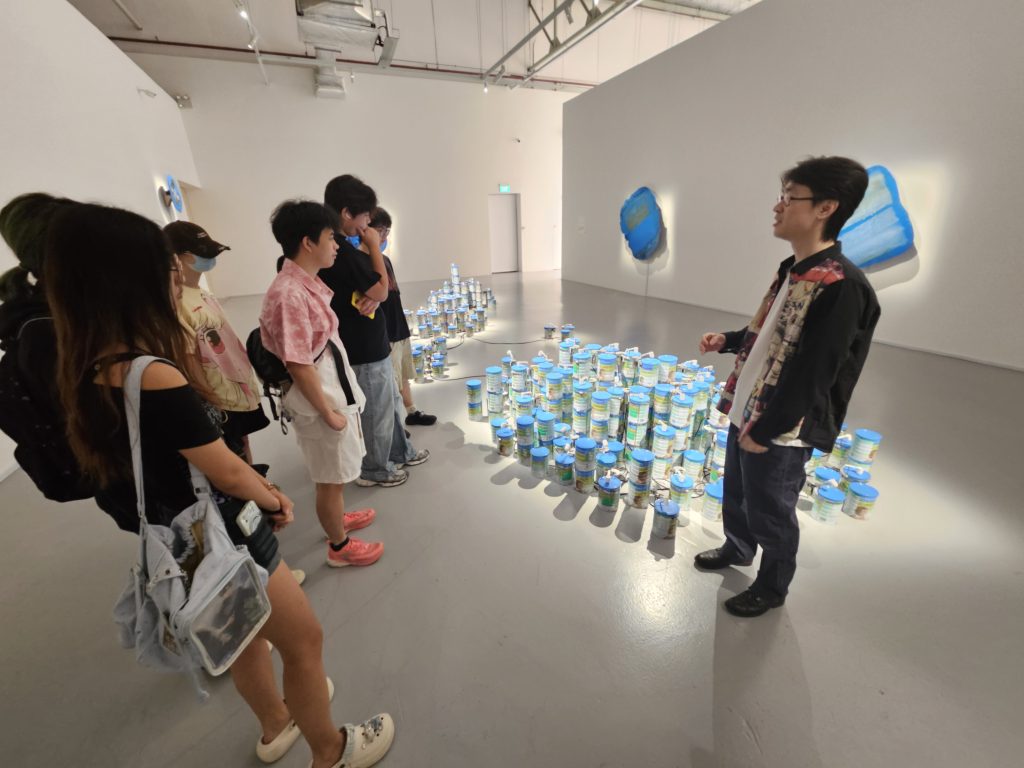
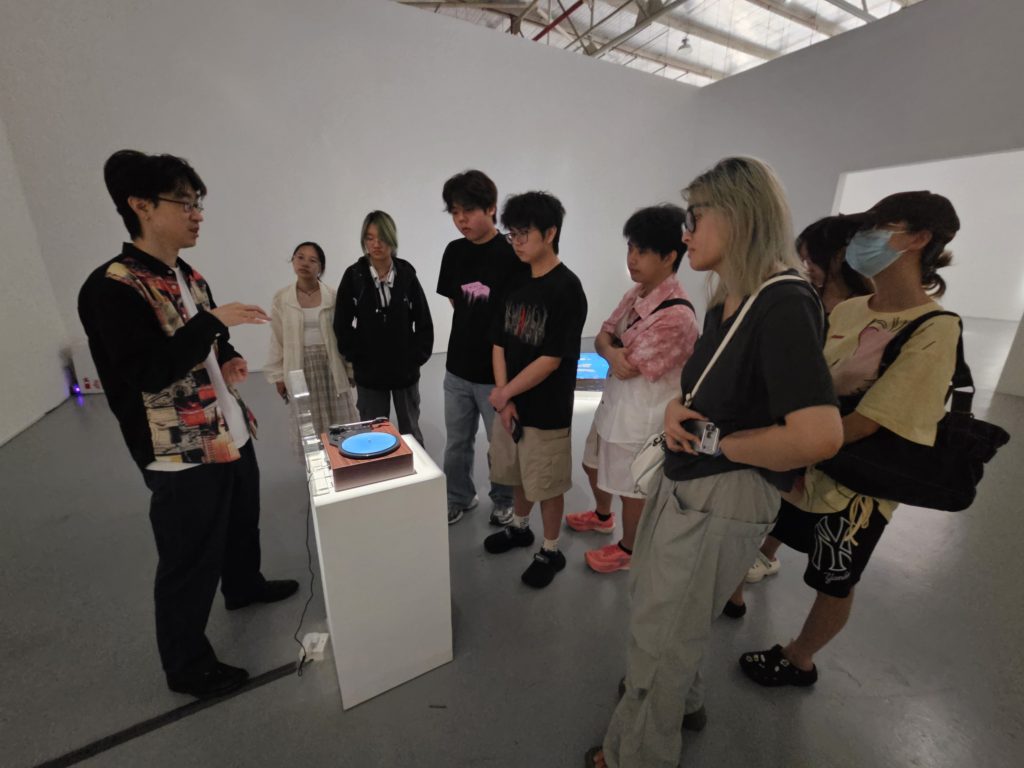
A gallery guide led students through the exhibition, explaining the ideas, materials and processes behind each work. Students asked questions about installations ranging from a vinyl turntable piece to a large floor work made of stacked tins and lights.
These conversations helped students understand how an artist moves from a concept to a finished installation, and how presentation shapes the way audiences experience a work.
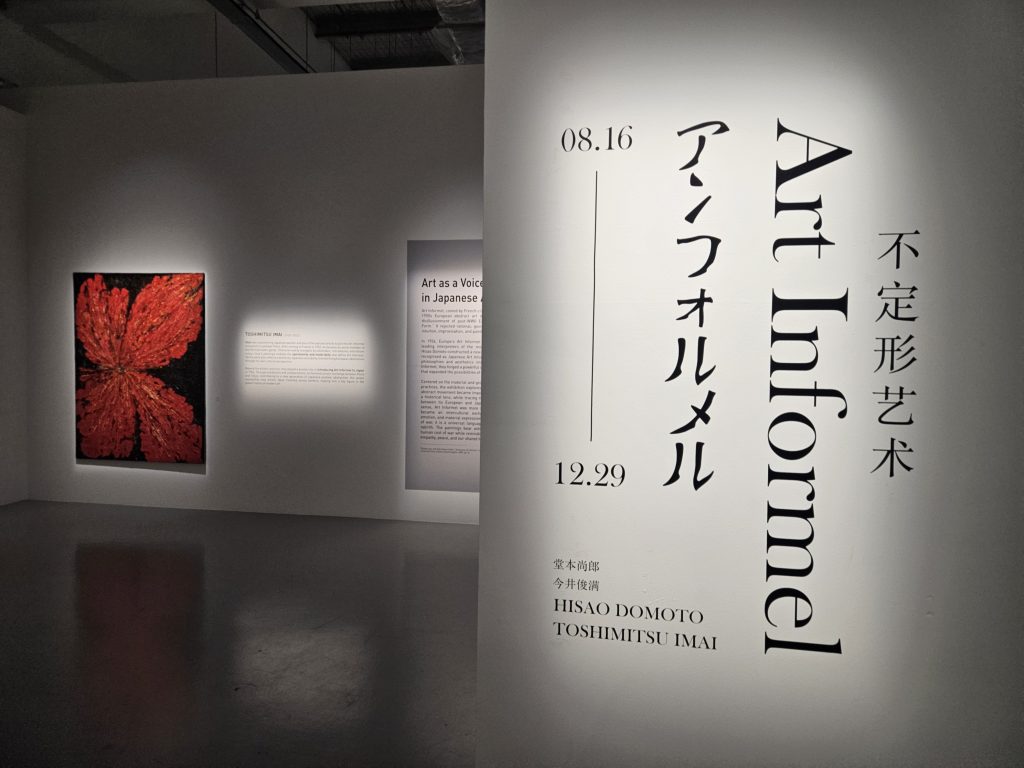
Next is Art Informel, a concurrent exhibition featuring Japanese painters Hisao Domoto and Toshimitsu Imai. The exhibition traces how Art Informel, a 1950s abstract movement, travelled between Paris and Tokyo, giving students a historical view of how artistic ideas cross borders.
Learning Through the OPAL Values
The visit put NIM’s OPAL core values into practice:
Objectivity saw students evaluate each artwork by considering the artists’ intentions, techniques and messages.
Perseverance showed as students engaged with challenging artistic concepts and explored different interpretations of the works.
Ambition grew as students were encouraged to broaden their creative aspirations and develop their artistic potential.
Learning came to life as students gained insight into contemporary art practices and how different media communicate ideas.
Inspiration for Their Own Creative Journeys
The experience broadened students’ artistic horizons and sharpened their critical thinking as they discussed and interpreted each work.
For SAST students, the visit showed that ordinary materials and everyday experiences can become powerful starting points for creative work. Experiences like this reflect Nanyang Institute of Management’s commitment to industry-relevant learning and to “Nurturing Today for Tomorrow.”